
Tesla shares jumped after the electric-vehicle maker received clearance connected with a robotaxi launch in Las Vegas. The company also plans to launch its Cybercab in Austin, Texas, soon and has received approval to deploy thousands of vehicles in Nevada.
At a glance
| Last | Change | Prev Close | |
|---|---|---|---|
| Tesla | 362.86 | +3.34% | 351.12 |
| S&P 500 | 7,674.37 | -0.44% | 7,707.98 |
| Dow Jones | 53,277.01 | -0.35% | 53,463.05 |
| Nasdaq Composite | 26,180.46 | -0.57% | 26,331.09 |

That combination matters because investors are increasingly judging Tesla not only as a car manufacturer, but also on whether it can turn autonomous driving into a large commercial business. The clearance advances that story, although permission to deploy vehicles is not the same as proving a safe, reliable and profitable robotaxi service.
What happened
The immediate catalyst was regulatory progress in Nevada. A robotaxi is a vehicle designed to carry paying passengers without a conventional human driver controlling every trip.
According to the news item, Tesla received the nod to deploy thousands of vehicles in Nevada. Its shares rose as investors reacted to the prospect of a Las Vegas launch and the planned Cybercab rollout in Austin.
The move gives Tesla more room to test and potentially expand its autonomous-transport ambitions. Nevada is especially relevant because Las Vegas has heavy visitor traffic and constant demand for short urban trips, though the provided report does not specify a launch date, operating area or commercial terms.
Tesla trades on the Nasdaq, where fast-changing expectations can produce sharp moves in a heavily followed stock. The share-price jump therefore reflects a change in expectations, not evidence that robotaxis are already generating meaningful profit.
Why ordinary investors should care
For shareholders, the central question is what Tesla may become. Its existing vehicle business can be assessed using deliveries, pricing and manufacturing economics, while a robotaxi network depends on software performance, regulation, fleet utilisation and passenger demand.
If autonomous transport works at scale, it could give Tesla a different business model from simply selling cars. Vehicles might generate revenue through repeated rides rather than through a one-time sale.
But that possibility sits in the future. A regulatory clearance can remove one obstacle without answering whether the technology works consistently in real streets, whether customers adopt it, or whether operating costs allow attractive margins.
This distinction is important whenever a stock rises on a milestone. The market often prices future cash flows before those cash flows appear, which can make the stock sensitive to delays or disappointing operating details. Our explainer on what the S&P 500 rally can hide beneath the surface offers a broader look at why headline market strength and underlying business progress are not always the same thing.
What the Nevada clearance does—and does not—prove
The clearance suggests that Tesla has passed a necessary administrative or regulatory step for deployment in Nevada. Based only on the supplied news item, it would be unsafe to assume this means unrestricted driverless operation everywhere in the state.
Autonomous-vehicle permissions can involve several layers, including vehicle registration, testing authority, commercial passenger rules and local operating conditions. The exact scope matters, so investors should look for the underlying Nevada documentation and future company disclosures rather than relying on the headline alone.
The Nevada Department of Motor Vehicles provides official information about autonomous vehicles in the state. Federal vehicle-safety oversight also matters, with the National Highway Traffic Safety Administration explaining the broader framework for automated-driving systems.
Most importantly, approval does not establish commercial success. Tesla still has to show that its service can operate safely, manage unusual road situations, keep vehicles available and clean, support passengers, handle insurance and produce acceptable economics.
Why Austin and Las Vegas are different tests
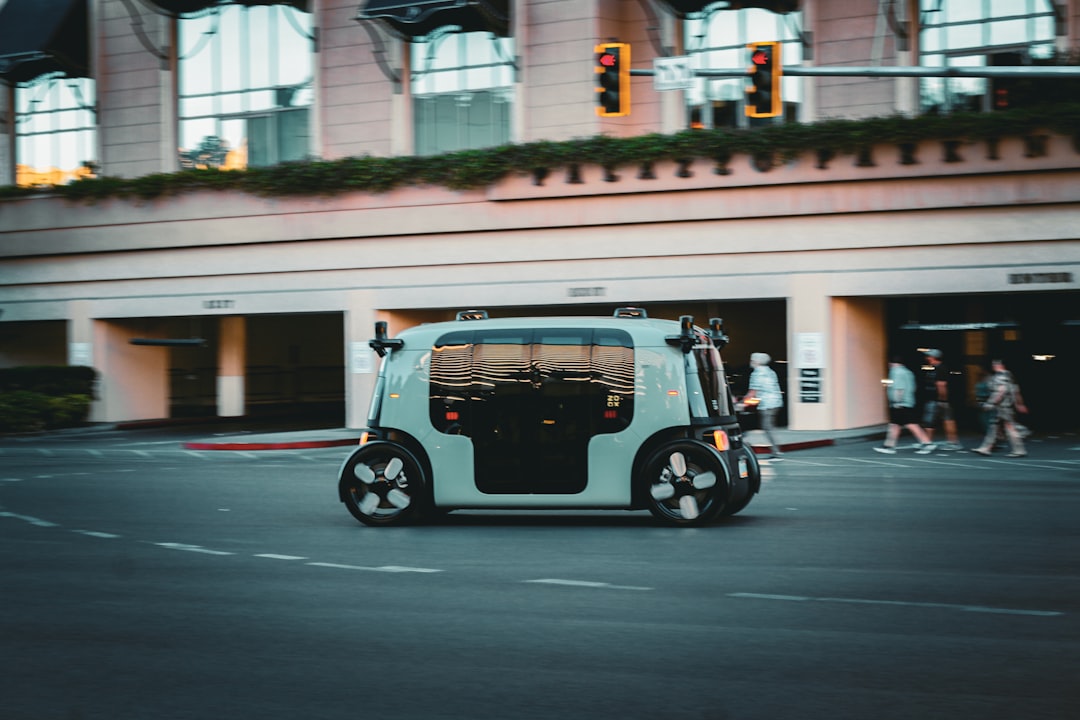
Tesla’s planned Cybercab launch in Austin and its Nevada deployment plans give investors two distinct settings to watch. Austin is the announced near-term launch location, while Las Vegas could test the service in a tourism-heavy market.
A robotaxi network must handle more than ordinary driving. Airport or hotel pickup points, busy entertainment districts, roadworks and passengers unfamiliar with the city can add operational complexity.
This is why the number of vehicles authorised for deployment should not be confused with the number actually operating or completing paid rides. Investors need evidence about active fleet size, service boundaries, hours, human supervision and trip volumes.
The valuation question behind the rally
Tesla’s stock can react strongly when a development appears to raise the probability of a large future business. In simple terms, valuation is the price investors place on a company relative to its current results and expected future cash flows.
Robotaxi optimism may support a higher valuation if investors believe autonomy can expand Tesla’s addressable market. Yet a valuation built around distant growth can also be vulnerable to higher bond yields, technical setbacks or a slower rollout.
This sensitivity is not unique to Tesla. Growth stocks often move when interest-rate expectations change because future profits are worth less in today’s money when the discount rate rises. Readers can see that mechanism in our discussion of how yields affected AI-chip stocks.
The main risks
Several uncertainties remain even after the stock’s positive reaction:
- Execution risk: Software that performs well in demonstrations may face rare but difficult situations in daily service.
- Regulatory risk: Rules can differ by state and can change after safety incidents or public scrutiny.
- Safety and liability: Crashes, system failures and questions over responsibility could affect operating costs and expansion.
- Commercial risk: Demand does not automatically produce profit once cleaning, charging, maintenance, insurance and customer support are included.
- Timeline risk: “Soon” does not provide a firm schedule. Delays could reset market expectations.
- Valuation risk: A share price that anticipates substantial future success can fall even if the business improves more slowly than expected.
Investors should also distinguish the Cybercab from Tesla’s wider vehicle fleet. The report says Tesla has permission to deploy thousands of vehicles in Nevada, but it does not establish how many would be Cybercabs, when they would enter service or whether all would operate without human oversight.
What to watch next
The next useful update will be more concrete than another announcement. Watch for a confirmed launch date, the precise service area and whether rides are available to the general public or only a limited group.
Operating details will matter too. These include whether a safety operator sits in the vehicle, whether remote human support is used, and what weather, road or time restrictions apply.
Investors should then look for evidence of scale: vehicles actively serving customers, completed paid trips, fleet utilisation and expansion beyond a tightly controlled zone. Tesla’s filings and updates through its investor-relations page are the best place to look for company-confirmed information.
Safety disclosures and regulator records deserve equal attention. A launch can be commercially exciting while still facing technical and legal constraints, and independent regulatory information helps balance company messaging.
Finally, watch whether Tesla discusses robotaxi economics. Revenue alone would not answer the central question; investors need to understand the costs required to deliver each ride and maintain the network.
The takeaway
Nevada clearance is a meaningful step because it gives Tesla’s robotaxi plan more regulatory and geographic momentum. Together with the proposed Austin Cybercab launch, it makes autonomy a more immediate part of the company’s investment story.
Still, this is a milestone rather than a finished business. The evidence that matters next will be safe public operation, repeatable service, real fleet activity and credible economics—not merely the number of vehicles permitted on paper.

Comments
Have a thought or a question? Leave a comment — no account needed.