
SK Hynix shares rebounded 8% after the memory-chip maker announced a record $28.6 billion share-buyback plan. The scale of the announcement made it the clearest company-specific market story in today’s news flow.
A buyback means a company repurchases its own shares. That can support the share price and increase each remaining share’s claim on future earnings, but it does not remove the business risks faced by semiconductor companies.
What happened
The central fact is straightforward: SK Hynix unveiled a record $28.6 billion buyback plan, and its shares rebounded 8%. The move also helped lift South Korean stocks in broader Asian trading.
A stock can react strongly to a buyback because the company itself becomes a large potential buyer. Investors may also read the decision as a sign that management believes the shares are worth supporting or that the company has room to return capital.
However, the supplied report does not specify the programme’s timetable, how quickly purchases will occur, or whether all authorised funds must ultimately be used. Those details matter because an announced authorisation is not always the same as completed buying.
Why a buyback can lift a stock
Suppose a company earns the same total profit but has fewer shares outstanding after repurchases. Its earnings per share, or profit divided by the number of shares, can rise even when total profit does not.
That arithmetic can make valuation measures look more attractive. It may also help offset dilution—the creation of additional shares through employee compensation or other corporate actions.
Buybacks can additionally signal confidence. Management is effectively choosing its own shares over alternatives such as retaining cash, building facilities, making acquisitions or paying dividends.
Yet that signal is not automatically reliable. A company can repurchase stock at an expensive valuation, and spending heavily on buybacks can leave less flexibility if industry conditions deteriorate.
Why US-market investors should care
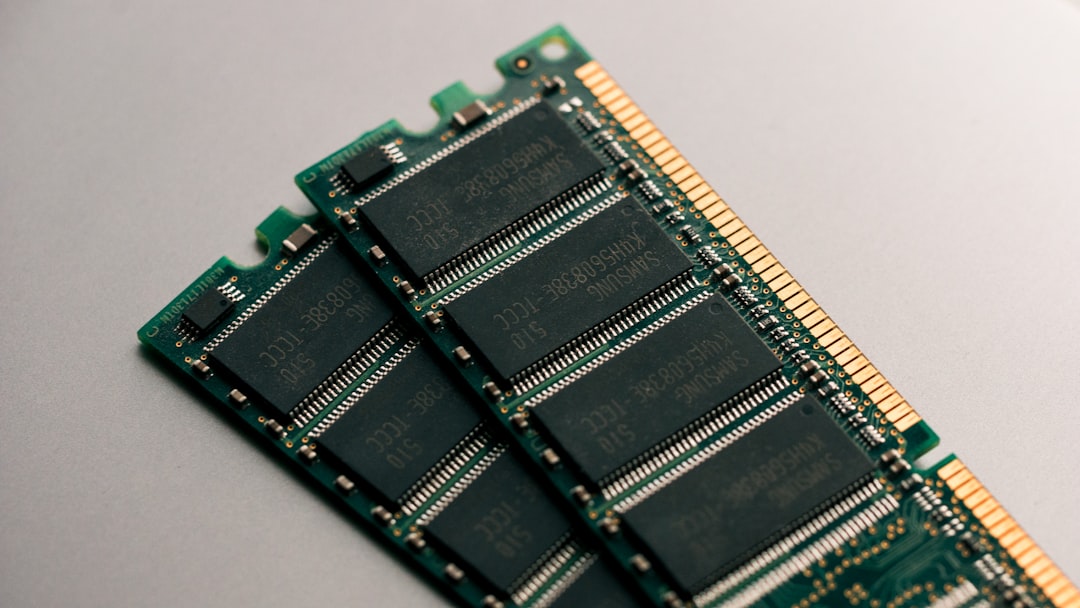
SK Hynix is South Korean, but it sits inside a global semiconductor supply chain closely linked to US-listed technology companies. Memory chips are important components in data centres, computers and other electronic systems, so changes in the memory cycle can influence sentiment across the wider chip sector.
The story is especially relevant while investors debate whether enthusiasm around artificial-intelligence infrastructure has pushed chip valuations too far. Today’s rebound shows that company-specific capital returns can still produce a sharp move even when the wider semiconductor rally encounters resistance.
That does not mean every chip stock should respond in the same way. Designers, foundries, equipment makers and memory manufacturers have different economics, customers and competitive pressures. Readers tracking the broader theme can compare this event with the recent AI-chip pullback and yield concerns.
The important context: memory is cyclical
Memory chips have historically been a cyclical business. “Cyclical” means revenue, prices and profits can rise and fall substantially as supply and demand move out of balance.
When demand is strong and supply is tight, selling prices can improve. When producers add too much capacity or customers reduce orders, prices and margins can come under pressure.
That is why investors should separate the immediate buyback reaction from the company’s longer-term operating outlook. A smaller share count can improve per-share figures, but it cannot by itself create customer demand or prevent an industry downturn.
What the $28.6 billion headline does not answer
The headline number is large, but several practical questions remain open based on the information provided.
- Timing: How long does the company have to complete the programme?
- Execution: Will purchases happen steadily, or only under certain market conditions?
- Funding: How much will come from existing cash versus future cash generation?
- Treatment of shares: Will repurchased shares be cancelled, held as treasury shares or used for another purpose?
- Opportunity cost: Could the same funds have produced better long-term value through investment in production, research or debt reduction?
These details can change the economic meaning of a buyback. Cancellation permanently reduces the share count, while treasury shares may later be reissued, depending on applicable rules and company decisions.
Buyback size is not the same as value creation
A repurchase creates the most value when shares are bought below a reasonable estimate of the business’s worth and the company still has adequate funds for operations and growth. Buying overpriced shares can transfer value away from long-term owners who remain invested.
Investors therefore need more than the authorisation amount. Useful measures include the planned repurchase as a percentage of shares outstanding, the purchase price, balance-sheet strength and expected capital spending.
It is also worth checking whether executives’ incentives depend heavily on earnings-per-share targets. Since buybacks can improve that metric mechanically, governance and compensation structures deserve attention.
What to watch next
First, look for formal disclosures from SK Hynix explaining the programme’s size, schedule and mechanics. The company’s official communications are more useful than trying to infer the full plan from the one-day share-price move.
Second, watch whether the company actually completes purchases. Announcements often move markets immediately, while the cash deployment can take much longer.
Third, follow operating indicators such as memory demand, pricing, inventories and capital-spending plans. Those factors are more important to lasting business performance than a single trading session.
Finally, monitor the response across major US chip shares and the Nasdaq. A broad, sustained reaction would suggest investors see wider implications; an isolated move would point more strongly to SK Hynix-specific news.
A useful way to read the rally
Today’s 8% rebound is evidence that investors welcomed the record buyback announcement. It is not proof that the stock is cheap, that semiconductor profits will keep rising or that the full $28.6 billion will immediately enter the market.
For ordinary investors, the practical lesson is to examine both sides of a buyback: the potential lift from fewer shares and the cash that will no longer be available for other uses. The strongest assessment combines the repurchase terms with business fundamentals rather than treating the headline amount as a verdict on future returns.



Comments
Have a thought or a question? Leave a comment — no account needed.