
Cerebras is trying to change the story around its struggling post-IPO stock. The company is betting that a new specialized chip can outperform traditional graphics processing units, or GPUs, as AI agents become more common.
That makes the launch more than a routine product update. It is a test of whether Cerebras can turn a technical difference into durable customer demand—and whether investors will give the company another chance after a weak start in public markets.

What happened
According to MarketWatch, Cerebras’s shares have performed poorly since the company’s initial public offering, or IPO. An IPO is the process through which a private company first sells shares to public investors.
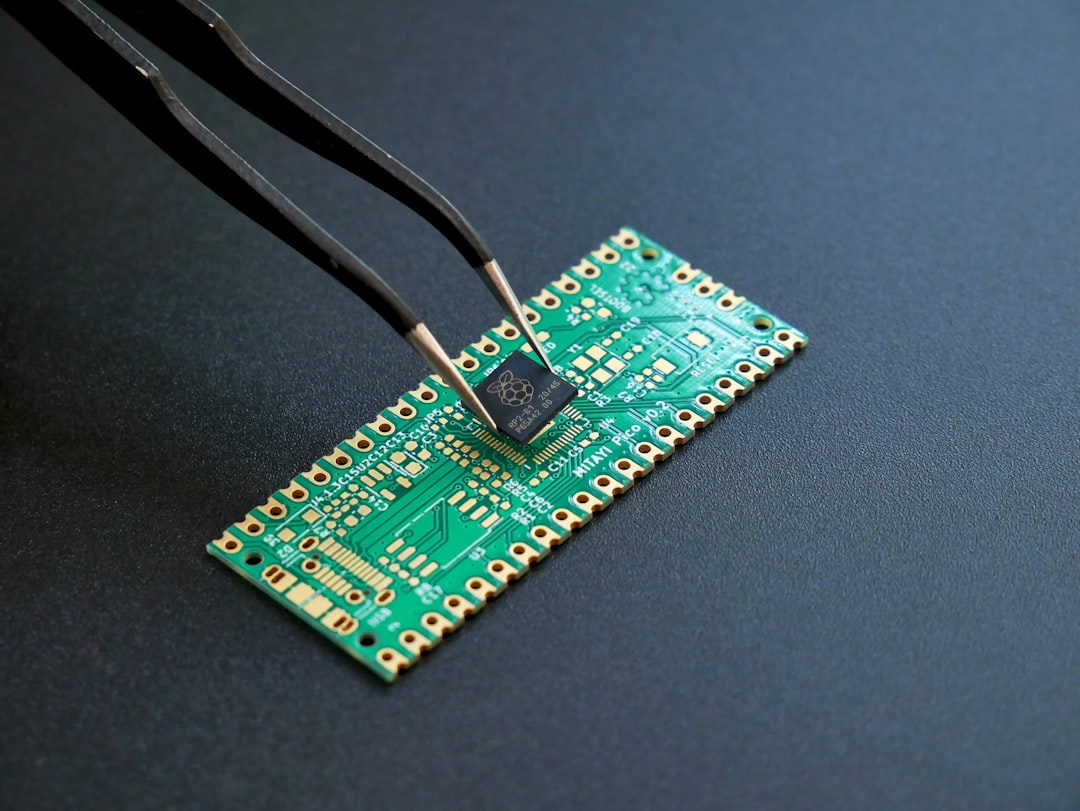
The company’s hoped-for comeback now rests heavily on a new chip designed for a changing type of artificial-intelligence workload. Cerebras argues that its specialized architecture can move faster than conventional GPUs when powering AI agents.
An AI agent is software that can pursue a goal by planning steps, using tools and responding to new information. Unlike a simple chatbot request, an agent may need to carry out a chain of tasks, making speed and computing efficiency increasingly important.
Why this chip matters
Most of the AI boom has been associated with GPUs. Originally built for graphics, these processors can perform many calculations at once and have become central to training and running AI models.
Cerebras is taking a different route. Instead of competing only on the familiar GPU template, it is promoting a specialized design intended to handle AI workloads in another way.
The opportunity is clear in principle: if AI agents become widespread, companies may want systems that can produce answers and complete multi-step tasks with less delay. But technical promise alone does not create a successful semiconductor business.
Customers also care about software compatibility, reliability, support, availability and the cost of operating a system. Cerebras therefore needs to show that its chip works well outside controlled demonstrations and fits into the tools customers already use.
Why ordinary investors should care
This story highlights the difference between being exposed to a strong theme and owning a successful business. Artificial intelligence can expand rapidly while individual AI companies still disappoint shareholders.
A post-IPO decline can also reset expectations without removing risk. A lower share price may look more appealing, but it does not by itself prove that revenue, margins or competitive positioning are improving.
For investors learning about newly listed companies, the Cerebras case is a useful companion to our explanation of how investors approached Reddit after its IPO. The central lesson is to separate excitement around a market from evidence about one company’s execution.
The chip race also affects broad-market investors. Large technology companies carry meaningful weight in the S&P 500, so shifts in AI spending and semiconductor competition can influence index performance even for people who never buy a chip stock directly. Our guide to the largest S&P 500 holdings explains why that concentration matters.
The competitive challenge
Cerebras is not entering an empty field. It must persuade customers to consider a specialized alternative in a market where established chip platforms already benefit from mature software ecosystems and existing purchasing relationships.
That creates switching costs. Switching costs are the time, money and operational disruption involved in moving from one technology platform to another.
A new chip may perform well on selected tasks, but customers will ask broader questions. Can their developers use it easily? Can it scale reliably? Is supply dependable? Will the company be available to support the product over its useful life?
For Cerebras, the challenge is therefore both technical and commercial. It must convert benchmark advantages into deployments, deployments into repeat business, and repeat business into healthier financial performance.
How to judge the comeback claim
Investors do not need to decide whether one architecture will “win” the whole AI market. A more practical approach is to track whether Cerebras is building a defensible place within it.
Useful signals include:
- Customer adoption: Watch for named customers, repeat orders and wider production use rather than trials alone.
- Workload fit: Look for evidence that the new chip performs well on the multi-step tasks associated with AI agents.
- Software support: Hardware becomes easier to adopt when developers can use familiar tools and move existing workloads with limited friction.
- Commercial economics: Faster processing matters most when it also improves the customer’s cost, capacity or user experience.
- Execution: Product availability and reliable delivery are essential in semiconductors, where design success does not automatically translate into shipped systems.
These points are more informative than a one-day share-price jump or fall. Short-term trading can reflect sentiment, positioning and changing expectations; long-term value depends more heavily on business results.
The risks behind the opportunity
The first risk is that demand for AI agents develops differently from Cerebras’s expectations. Agents may grow rapidly, but customers could continue using traditional GPUs or choose other specialized hardware.
The second risk is competition. Well-funded rivals can improve their own products, lower effective costs or use broad software ecosystems to keep customers from switching.
The third is execution. A promising chip still has to be manufactured, delivered and supported consistently. Any gap between announced capability and real-world availability could weaken the comeback case.
Finally, post-IPO stocks can remain volatile because the market is still working out an appropriate valuation. Valuation means the price investors assign to a business relative to factors such as its sales, profits, growth and risks.
What to watch next
The next meaningful milestones are likely to come from evidence, not slogans. Investors should watch for customer announcements, independent performance tests and signs that trial users are moving to larger deployments.
Financial updates will also matter. Product enthusiasm becomes more credible when it leads to sustained demand and improving business quality rather than a temporary burst of attention.
It is also worth watching how the broader AI-infrastructure market evolves through the Nasdaq and other US exchanges. The key question is not simply whether AI spending stays strong, but how much of that spending reaches challengers outside the established GPU ecosystem.
Cerebras has identified a potentially important shift: AI agents may place a premium on rapid, repeated computing. Its new chip now has to prove that this insight can support a durable public company, not merely an interesting technology demonstration.



Comments
Have a thought or a question? Leave a comment — no account needed.