
AI chip stocks are pulling back after riding a powerful wave of enthusiasm. The immediate pressure comes from a difficult mix: lofty investor expectations, elevated U.S. Treasury yields and concern that financial progress at AI company Anthropic may fail to impress the market.
The move matters beyond semiconductor specialists. AI-linked shares have become influential parts of major U.S. benchmarks, so a change in sentiment can affect index investors even if they do not own an individual chip stock directly.

What happened
Shares connected to artificial intelligence had been riding high, but Micron and other chip stocks are now losing momentum. The available report points to three broad causes rather than one company-specific shock.
First, expectations are already high. When investors have priced in rapid growth, even encouraging news can disappoint if it does not clear the market’s elevated bar.
Second, Treasury yields remain elevated. A Treasury yield is the return investors can earn by holding U.S. government debt; it also acts as an important reference point when markets value stocks.
Third, investors are considering whether Anthropic’s financial progress could fall short of the optimism surrounding AI demand. That concern can travel through the AI supply chain because chipmakers depend on continued spending by companies building and operating AI systems.
Why higher yields can hurt chip valuations
Growth stocks are commonly valued on profits investors expect many years into the future. Analysts convert those future profits into a present value using a “discount rate”—a rate that reflects both the passage of time and investment risk.
When Treasury yields rise, that discount rate can rise too. Future earnings then become less valuable in today’s terms, which can pressure a stock’s valuation even if the company’s operating outlook has not suddenly deteriorated.
There is also a competition effect. Higher government-bond yields can make relatively safer fixed-income assets more attractive compared with expensive shares whose returns depend on years of strong execution.
This does not mean every increase in yields must trigger a semiconductor sell-off. It means high-multiple stocks—shares valued at large multiples of sales or earnings—can become more sensitive when bond yields stay elevated.
The same connection between interest-rate expectations and equities has appeared in earlier market moves, including our explainer on why U.S. futures steadied as rate-hike fears eased.
Why Micron is part of the AI trade
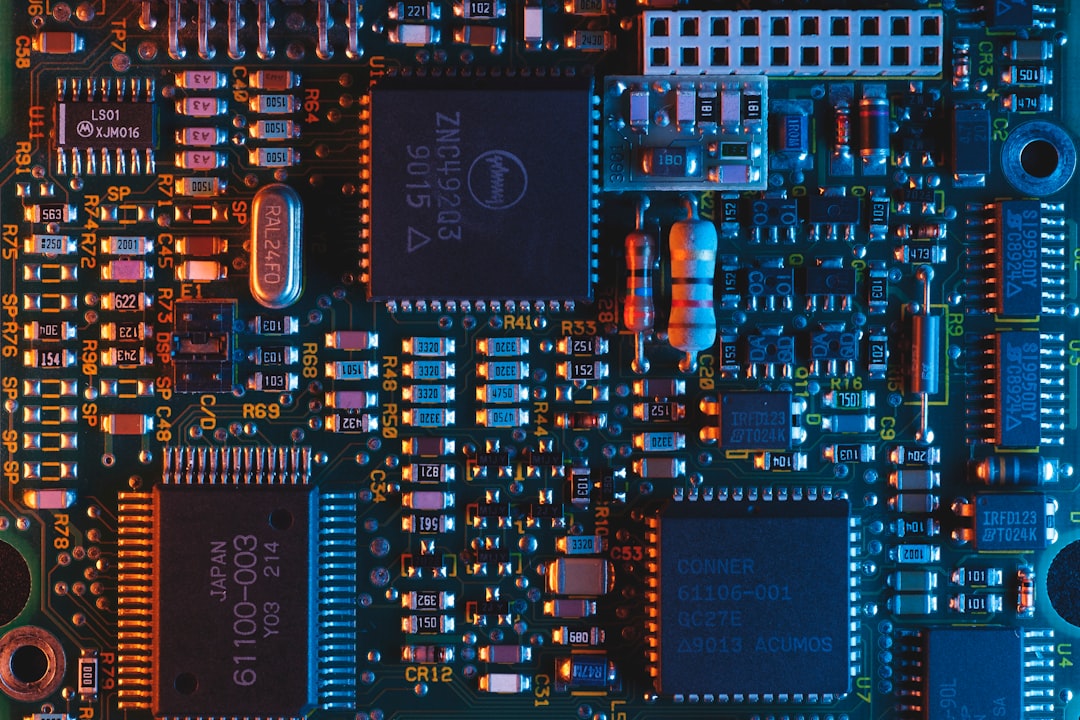
Micron Technology makes memory and storage products. Memory is essential for processing and moving the large volumes of data involved in advanced computing, so investors often treat Micron as one of the companies exposed to AI infrastructure spending.
But exposure to a popular theme does not remove the semiconductor industry’s usual risks. Chip markets can be cyclical, meaning supply, demand and pricing can rise and fall sharply over time.
That distinction is important. A long-term AI opportunity and a short-term stock decline can coexist: the market may remain optimistic about demand while questioning how much of that optimism is already reflected in share prices.
High expectations are a risk of their own
A company does not need to report bad news for its shares to fall. If a stock has risen because investors expect exceptional growth, merely solid progress may not be enough.
This is often called an “expectations reset.” The market lowers the price it is willing to pay while it waits for earnings, revenue or customer spending to catch up with earlier optimism.
Investors saw a similar pattern when Cisco pulled back despite record AI-fuelled results. The broader lesson is that a strong business update and a strong one-day stock reaction are not the same thing.
Why Anthropic matters to chip investors
Anthropic develops AI systems. Although it is not itself a listed chipmaker, the financial progress of prominent AI developers can influence how investors judge demand across the infrastructure chain.
Building and running AI systems requires computing capacity. If leading developers demonstrate durable growth and the ability to fund continued expansion, that can support confidence in spending on chips, servers and data centres.
If their financial progress disappoints, investors may ask whether infrastructure spending has moved ahead of near-term business returns. That question can weigh on suppliers even before there is evidence of an actual decline in chip orders.
The key point is that sentiment can move faster than fundamentals. A concern about one AI company’s economics can quickly affect a basket of semiconductor shares because investors increasingly view them as parts of the same trade.
What this means for ordinary investors
The first step is to check exposure. Someone holding a U.S. index fund may already own substantial technology and semiconductor exposure through the benchmark, even without selecting individual AI shares.
The S&P 500 is weighted by market capitalisation, meaning larger companies exert more influence over its movements. Our guide to the largest S&P 500 weights explains why leadership among a relatively small group can matter to broad-market returns.
Indian investors also face currency and access considerations when investing in U.S. securities. A return measured in dollars can differ from the return measured in rupees, while overseas funds or platforms may add fees and tracking differences.
Most importantly, a fashionable label should not replace basic analysis. Investors can separate three questions: Is AI demand growing? Can a particular company turn that demand into profits? And does today’s valuation leave room for disappointment?
Risks behind the pullback
Several risks can reinforce one another:
- Valuation risk: High expectations leave less room for an ordinary quarter or cautious forecast.
- Interest-rate risk: Elevated Treasury yields can reduce the present value assigned to distant earnings.
- Spending risk: Any sign that AI developers are slowing investment could affect suppliers across the chain.
- Cycle risk: Memory and other chip markets can experience swings in inventories, pricing and capacity.
- Concentration risk: Investors may unknowingly hold the same AI theme through several funds and stocks.
These risks do not establish that the AI investment cycle has ended. They explain why share prices can become volatile when the market begins demanding stronger proof of commercial returns.
What to watch next
The clearest signal will come from company results and outlooks. Investors can listen for comments on AI-related demand, customer orders, pricing, inventories and planned capital expenditure—money spent on long-lived assets such as factories and equipment.
Keep an eye on U.S. Treasury yields as well. The U.S. Treasury publishes information about government securities, while the Federal Reserve shapes the wider interest-rate environment through monetary policy.
Updates from major AI developers also matter, especially evidence about revenue growth, funding needs and the economic returns from deploying advanced models. The important question is not simply whether companies are spending on AI, but whether that spending remains durable.
Finally, watch whether weakness stays limited to highly valued chip names or spreads across the broader market. The Nasdaq has heavy exposure to technology, but a sector pullback and a market-wide deterioration are different developments.
For now, the retreat looks like a test of expectations. Investors are weighing a potentially large AI opportunity against higher financing benchmarks and the reality that even promising technologies must eventually support the valuations attached to them.



Comments
Have a thought or a question? Leave a comment — no account needed.