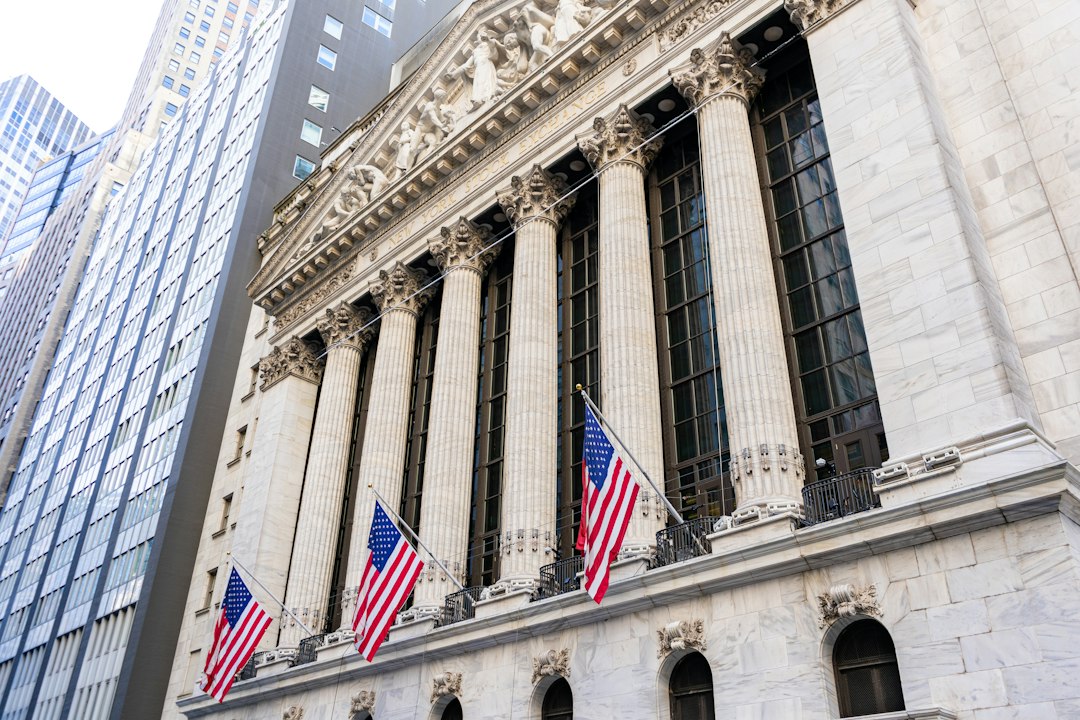
US stock-index futures declined on Sunday as investors reconsidered whether the Federal Reserve could raise interest rates as soon as September. Hawkish comments from Fed Chair Kevin Warsh—meaning comments that favour tighter monetary policy to control inflation—were the immediate trigger.
A second worry made the move more serious: renewed fighting between the US and Iran threatened to push energy prices higher. Together, higher rate expectations and oil-related inflation risks created an uncomfortable backdrop for shares before Monday’s session.
What happened
The key change was not an actual interest-rate decision. It was a shift in what markets believe the Fed may do next.
Following Warsh’s Jackson Hole comments, investors increased their expectations of a September rate hike. US stock futures slipped as traders adjusted prices before the cash market opened on the New York Stock Exchange and Nasdaq.
Stock-index futures are contracts linked to benchmarks such as the S&P 500, Nasdaq Composite and Dow Jones Industrial Average. They trade outside normal market hours and indicate where investors expect the market to open, though that indication can change quickly.
The reaction also spread beyond US equities. The dollar held near a two-week high, while Asian markets weakened. South Korea’s KOSPI fell 2.46%, and Japan’s Nikkei 225 lost nearly 2%, according to the supplied reports.
Why renewed rate-hike bets hurt stocks
Higher interest rates affect shares in two main ways.
First, they raise borrowing costs for households and companies. Loans become more expensive, which can cool spending, hiring and business investment.
Second, higher rates can reduce the present value of expected future profits. This matters especially for growth companies whose valuations depend heavily on earnings projected many years ahead.
Investors also compare shares with relatively safer interest-paying assets. If yields on government bonds rise, stocks may need to offer better prospective returns to remain attractive.
That does not mean every company falls equally. Banks can sometimes benefit from higher lending rates, while heavily indebted businesses and richly valued technology stocks may face more pressure. The final effect depends on credit conditions, deposit costs, profit margins and economic growth.
The reversal is notable because markets had previously responded positively when rate-hike fears eased. Our earlier explainer on US futures and changing Fed expectations shows how quickly the same mechanism can work in the opposite direction.
Why oil makes the Fed’s task harder
Renewed US-Iran fighting adds an energy-price shock to the rate debate. Another supplied report said Brent crude moved above $90 a barrel as the conflict intensified.
More expensive oil can increase transport, manufacturing and distribution costs. If businesses pass those costs to customers, inflation can remain elevated even as higher rates slow economic activity.
That combination is difficult for a central bank. Raising rates may help restrain demand and inflation, but it can also place more pressure on growth and employment. Leaving rates unchanged may support the economy, yet risk allowing price pressures to persist.
The Fed’s dual mandate is to promote maximum employment and stable prices. Its official policy decisions are made by the Federal Open Market Committee, not by market pricing alone.
What this means for ordinary investors
A futures decline is a signal, not a forecast carved in stone. Prices can reverse after economic data, company news or further comments from policymakers.
For long-term investors, the more useful question is how a higher-rate environment could affect the businesses or funds they own. Companies with substantial debt may face larger refinancing bills, while firms with strong cash flows and manageable borrowing may be better placed to absorb tighter conditions.
Investors with exposure to US assets from India should also watch the dollar. A stronger US currency can lift rupee-denominated returns on dollar assets, but currency movements can reverse and should not be treated as a dependable source of profit. For background, see our guide to the US dollar and inflation expectations.
Gold investors face competing forces. Geopolitical conflict can increase demand for defensive assets, but higher interest rates and a firmer dollar can weigh on gold because the metal pays no interest. This tension helps explain why gold can fall even when geopolitical risks rise; our earlier piece on gold and the Fed’s rate path explores that relationship.
The most important distinction: expectations versus action
Markets are currently reacting to the possibility of a September increase. That is different from the Fed announcing one.
Expectations can move rapidly as policymakers speak and fresh inflation or employment information arrives. Futures prices therefore reflect a changing balance of probabilities, not certainty.
This distinction matters because investors can overreact to a single speech. The Fed normally considers a broad range of economic evidence before changing policy, and the market may revise its view several times before the next decision.
What could change the picture
The first issue to monitor is whether policymakers reinforce or soften Warsh’s hawkish message. Consistent support for tighter policy could keep pressure on rate-sensitive shares, while more cautious language could ease it.
The second is the US-Iran conflict and its effect on oil. A sustained energy-price increase would strengthen the inflation concern; a quick retreat could remove part of the pressure.
Investors should also watch whether the futures weakness carries into regular US trading. The S&P 500 and technology-heavy Nasdaq may react differently depending on bond yields and the scale of the oil move.
Finally, observe the dollar and government-bond yields together. If both remain firm, that would suggest markets continue to expect tighter US financial conditions. If they retreat, investors may be reconsidering the likelihood or size of a September move.
For now, the central market story is a collision between two inflation risks: a Fed that may need to tighten again and an energy shock that could make inflation harder to contain. Monday’s trading will show whether investors see this as a brief repricing or a broader change in the outlook for US assets.

Comments
Have a thought or a question? Leave a comment — no account needed.