
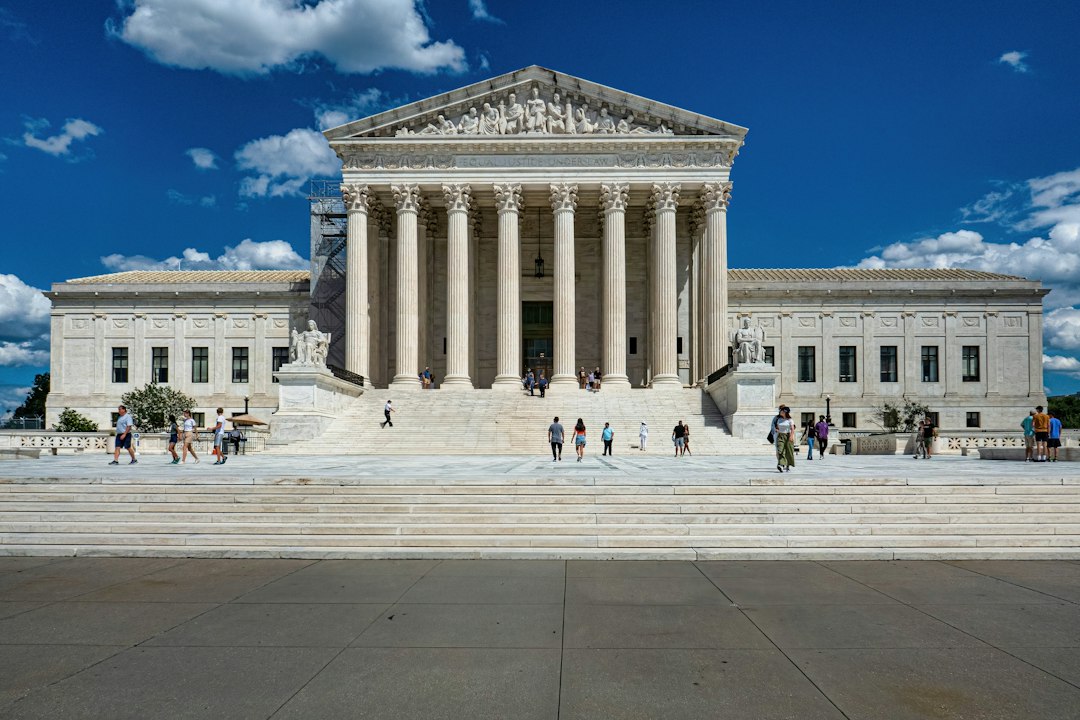
Prediction markets suffered an important legal setback on Friday. The 9th U.S. Circuit Court of Appeals ruled that sports-related event contracts are not “swaps,” allowing Nevada’s oversight challenge to proceed rather than leaving the field solely to federal commodities regulation.
That ruling conflicts with an April decision from the 3rd Circuit. The disagreement between two federal appeals courts makes this more than a local dispute: it creates the kind of legal split that can increase the likelihood of eventual review by the U.S. Supreme Court.
What happened
Prediction markets let users trade contracts whose value depends on whether a future event occurs. A sports contract, for example, can settle according to the outcome of a game rather than the price of a stock or bond.
The 9th Circuit ruled against an effort by Kalshi to block Nevada from overseeing sports-related contracts. The court concluded that these contracts are not swaps, contradicting the 3rd Circuit’s earlier ruling.
A swap is a financial contract in which parties exchange cash flows or risks according to agreed terms. That classification matters because it can help determine whether federal derivatives law applies and whether state gaming authorities may intervene.
The immediate result is not a final nationwide ban on prediction markets. Instead, the ruling strengthens Nevada’s position and leaves operators facing different legal interpretations in different parts of the country.
Why the court split matters
Federal appeals courts cover different regions of the United States. When two circuits interpret the same legal question differently, a business may face one rule in one region and another elsewhere.
That is especially difficult for an online platform. Its contracts may be offered through one national interface, but state regulators can take different views on whether those products resemble regulated financial instruments or sports wagering.
The split also introduces uncertainty for customers. Availability, contract selection and platform rules could depend increasingly on where a user lives while the legal dispute continues.
The Supreme Court does not automatically hear a case whenever circuits disagree. Still, conflicting appellate decisions can make review more likely because a nationwide industry benefits from a consistent interpretation of federal law.
The central regulatory question
The dispute is fundamentally about who gets to set the rules. Prediction-market operators function in the federal commodities framework, where the Commodity Futures Trading Commission oversees derivatives markets.
States, meanwhile, regulate gambling within their borders. Nevada has a particularly direct interest because sports wagering falls within its established gaming system, overseen by the Nevada Gaming Control Board.
If sports event contracts are treated primarily as federally regulated derivatives, platforms can argue that state gaming rules should not control them. If they fall outside the relevant federal definition, states have a stronger case for applying their own licensing and enforcement regimes.
That distinction sounds technical, but its practical effect is straightforward. It can decide whether a prediction platform can offer one product nationally or must navigate a patchwork of state-by-state restrictions.
Why ordinary investors should care
Prediction contracts may look and trade somewhat like financial instruments, but their economics can be very different from owning a share. A stock represents an ownership interest in a company; an event contract typically pays according to a defined yes-or-no outcome.
This means the buyer can lose the amount committed if the event resolves against the position. Legal uncertainty adds another layer of risk because a contract can be affected not only by the underlying event, but also by changes in where and how the platform may operate.
The case also illustrates why market structure matters. An exchange is not merely an app displaying prices; it operates within rules governing access, settlement and supervision. Readers who want the basics can start with our explainer on how stock exchanges work, while keeping in mind that prediction markets sit in a distinct regulatory category.
For Indian readers accessing US financial products, geography can be particularly important. A product being available online does not necessarily mean it is permitted in every US state or suitable under rules applying in another country.
What this does not decide
The 9th Circuit ruling does not settle the status of every prediction contract. The reported decision concerns sports-related event contracts and whether Kalshi could block Nevada oversight.
It also does not resolve the conflict with the 3rd Circuit. Unless a higher court supplies a nationwide answer, courts and regulators may continue reaching different conclusions.
Nor does the case establish that every prediction market is identical to a sportsbook. The legal question turns on statutory definitions and regulatory authority, not simply on how a product appears to a casual user.
Business risks for prediction platforms
The first risk is fragmentation. If state authorities can separately oversee sports event contracts, a platform may need different permissions, product menus or restrictions across jurisdictions.
The second is compliance cost. Multiple legal regimes can require more lawyers, controls and reporting, potentially making expansion slower or more expensive.
The third is product risk. Platforms may have to withdraw or redesign certain contracts if regulators or courts reject their preferred classification.
Finally, there is headline risk. Customers and business partners may hesitate when a platform’s operating model remains subject to active litigation, even when the service continues functioning.
What to watch next
The clearest signal would be a request for Supreme Court review. Investors should distinguish between a party asking the Court to hear a case and the Court actually agreeing to do so.
Watch for additional rulings in other circuits as well. Another appellate decision could widen the disagreement or support one side’s interpretation.
Regulatory responses also matter. Statements or enforcement actions from the CFTC and individual state gaming authorities could shape which contracts remain available while litigation proceeds.
Finally, pay attention to platform-level changes rather than assuming the court decision has an immediate nationwide effect. Restrictions may emerge state by state, and sports contracts may be treated differently from contracts tied to politics, economics or other events.
The takeaway
The biggest development is not that prediction markets have been outlawed. It is that a major federal appeals court has backed state oversight of sports event contracts while another circuit has taken a conflicting view.
That leaves the industry with no single national answer and raises the possibility of a Supreme Court fight. For users, the sensible focus is on contract terms, jurisdiction and regulatory status—not merely the probability displayed on a trading screen.



Comments
Have a thought or a question? Leave a comment — no account needed.