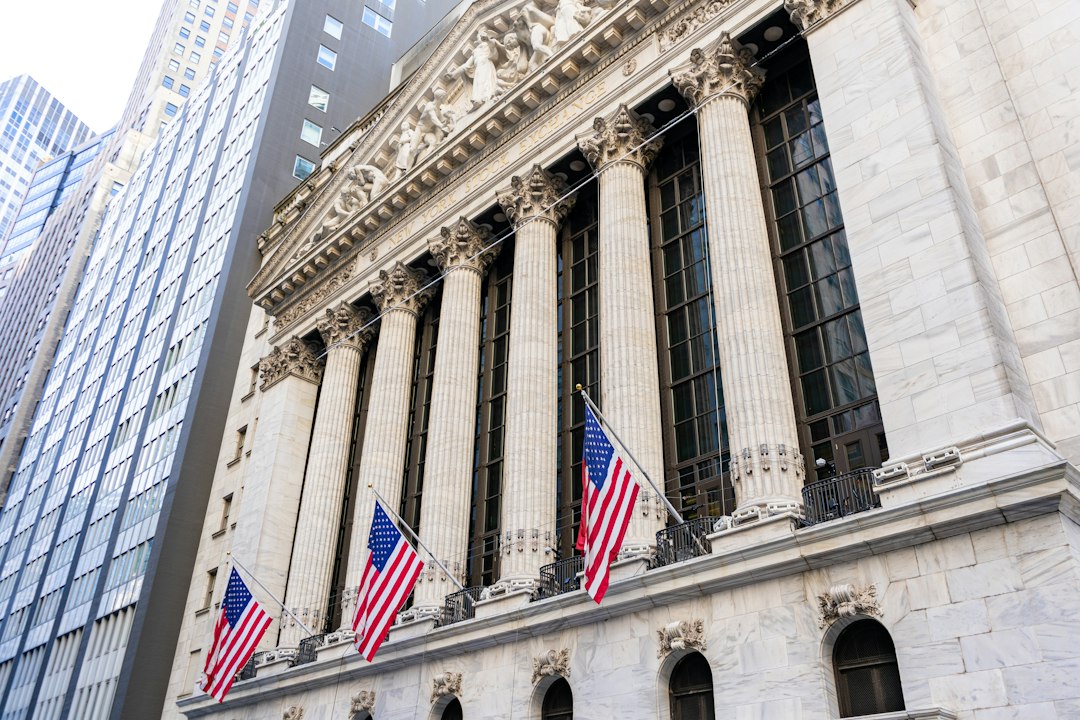
The odds of another US interest-rate increase have risen sharply after Federal Reserve Chair Kevin Warsh’s Jackson Hole speech. Traders now price a 57% chance of a September hike, up from 30% before the speech, according to the report.
That shift matters beyond Wall Street. Higher US rates can affect bond yields, stock valuations, the dollar and global money flows—including capital moving into or out of emerging markets such as India.
What changed after the speech
Markets interpreted Warsh’s remarks as opening the door to tighter monetary policy. A rate hike means the Federal Reserve raises its target for short-term borrowing costs, usually to keep inflation under control.
The key development is not that a September hike is certain. It is that traders moved from treating a hike as the less likely outcome to assigning it a 57% probability—still only a market estimate, not a decision by the Fed.
These probabilities are derived from prices in interest-rate markets. They can change quickly when officials speak or when fresh economic data alters expectations.
Why this matters to ordinary investors
Interest rates act like gravity for asset prices. When safer bonds offer higher yields, investors may become less willing to pay rich prices for shares, particularly companies whose expected profits sit far in the future.
That can put pressure on highly valued growth and technology stocks. It does not mean every such stock must fall, but the discount rate—the rate used to translate future profits into today’s value—becomes less favourable when market interest rates rise.
Bond investors face a different issue. Bond prices generally fall when yields rise, so existing longer-term bonds can lose market value if investors expect rates to stay higher.
Our explainer on rising Treasury yields and US stocks offers more context on this relationship. The earlier discussion of Treasury debt buybacks and lower yields shows how changes in bond-market conditions can also work in the opposite direction.
Goldman Sachs is not convinced yet
Despite the market’s shift, Goldman Sachs expects rates to remain unchanged in September, according to the report. Its view highlights an important distinction: market pricing reflects the combined bets of traders, while economists and banks may reach different conclusions from the same information.
Goldman’s forecast is conditional rather than absolute. The firm warned that hotter-than-expected inflation data could change the outlook.
That disagreement is useful for investors. A 57% probability means uncertainty remains high, with meaningful room for either a hike or no change.
Inflation data now carries more weight
Inflation measures how quickly the general level of prices is rising. If upcoming inflation readings are stronger than expected, the Fed may have more reason to lift rates or keep policy restrictive for longer.
Softer inflation could weaken the case for a hike. Markets may therefore react sharply not only to the headline inflation number, but also to details showing whether price pressure is broad or concentrated in a few categories.
Employment conditions also matter because the Fed considers both price stability and the labour market. One of today’s other reports points to slower summer hiring and fewer help-wanted advertisements, creating a possible tension between inflation risks and weakening job growth.
The bond market may move before the Fed does
The US Treasury market does not need to wait for a formal rate decision. Yields can rise as soon as traders expect tighter policy, and those moves can flow through to mortgages, corporate borrowing costs and valuation models.
Shorter-term Treasury yields tend to be especially sensitive to expectations for the Fed’s next few meetings. Longer-term yields also reflect inflation expectations, future growth and the compensation investors demand for lending money over many years.
A higher-rate outlook may also support the US dollar because dollar-denominated assets can become more attractive relative to alternatives. For Indian investors with US holdings, currency moves can either add to or reduce the return measured in rupees.
Tokenised bonds add another layer
A separate report on the same speech says the Fed’s shift toward tokenising bonds was linked by experts to preserving US-dollar dominance amid global demand and inflation challenges. Tokenisation means representing ownership of an asset—such as a bond—through digital tokens on a ledger.
This is distinct from the immediate rate decision. Market infrastructure may change how securities are issued, transferred or settled, while monetary policy determines the price and availability of money in the economy.
Investors should avoid blending the two themes into one trade. Tokenisation is a structural development; September rate expectations are a near-term policy question.
What could make markets reverse course
The current 57% estimate can fall as quickly as it rose. Several developments could challenge the market’s interpretation:
- Inflation could come in cooler than expected.
- Hiring and other growth indicators could weaken further.
- Fed officials could clarify that the speech was not intended to signal an imminent hike.
- Bond markets could decide that tighter policy would slow future growth enough to reduce longer-term yields.
The reverse is also possible. Persistent inflation or more hawkish Fed commentary—“hawkish” means favouring tighter policy to restrain inflation—could push rate-hike odds higher.
What to watch next
First, watch official communication from the Federal Open Market Committee, the Fed body that sets interest-rate policy. Speeches and meeting materials can show whether Warsh’s message has broad support among policymakers.
Second, follow incoming inflation and employment reports rather than relying on one speech alone. Markets continually update their assumptions as new evidence arrives.
Third, monitor Treasury yields and rate-sensitive parts of the stock market. Utilities, property-related shares, banks and high-valuation technology companies can react differently because borrowing costs affect their businesses and valuations in different ways.
Finally, remember that the New York Stock Exchange and Nasdaq are closed on Sunday. The clearest immediate market reaction should emerge when bond and equity trading resumes.
The practical takeaway is not to treat 57% as a forecast carved in stone. It is a snapshot showing that investors now see a September rate increase as a serious possibility—and that the next inflation and labour-market readings could decide whether that view holds.


Comments
Have a thought or a question? Leave a comment — no account needed.