The next US interest-rate decision may come down to a remarkably small difference in the inflation data. Markets are wavering over which way policymakers lean, putting unusual weight on the upcoming reports for producer and consumer prices.
That matters far beyond Wall Street. A close call at the Federal Reserve can quickly affect bond yields, borrowing costs, savings returns and the value investors place on company profits.
What happened
According to CNBC, the Fed’s rate call could hinge on only a few hundredths of a percentage point in the next inflation readings. Traders have been shifting between possible policy outcomes, while attention turns to reports covering prices paid by producers and consumers.
The consumer-price report tracks changes in prices paid by households. The producer-price report measures prices received by domestic producers and can offer clues about cost pressure earlier in the supply chain.
These are not interchangeable gauges. A small surprise in either report could change how investors interpret the inflation trend, especially when policymakers appear finely balanced.
The official releases come from the US Bureau of Labor Statistics. The Fed also studies a broad set of labour-market, growth and financial data rather than deciding policy from a single number.
Why a few hundredths can matter
Central banks usually move interest rates in larger increments than the tiny differences now under scrutiny. But data do not need to change by the same amount as the policy rate to alter the direction of the debate.
A slightly hotter inflation reading could suggest that price pressure remains persistent. A slightly softer result could strengthen the case that inflation is cooling enough to allow easier policy.
The key word is expectations. Markets price assets using assumptions about future rates, so even a modest data surprise can force investors to revise those assumptions.
This repricing often appears first in US Treasury securities, whose yields serve as important reference rates across the financial system. Readers wanting more background can see how rising Treasury yields can pressure US stocks.
Why ordinary investors should care
Interest rates influence the present value of future company profits. When expected rates rise, distant profits become less valuable in today’s money, which can weigh particularly heavily on richly valued growth shares.
Lower expected rates can provide the opposite support, although the reason for lower rates also matters. If policymakers are responding to weakening economic conditions, cheaper money does not automatically mean stronger corporate earnings.
Bond prices and yields move in opposite directions. Existing fixed-rate bonds may gain when market yields fall and lose when yields rise, with longer-maturity bonds generally more sensitive to rate changes.
Cash savers may experience the shift more gradually. Banks and money-market products can adjust their offered returns after policy expectations or the Fed’s actual decision changes.
For Indian investors holding US assets, there is another layer: currency movement. Returns measured in rupees depend not only on the US asset’s price but also on changes between the dollar and the rupee.
Inflation data can create false precision
The focus on hundredths of a percentage point can make an economic estimate look more exact than it really is. Inflation reports are carefully produced, but they are still statistical measurements built from large samples and established methods.
Monthly figures can be noisy. One category may temporarily lift the headline number even while broader inflation pressure is cooling, or a weak component may disguise continued strength elsewhere.
Seasonal adjustment also matters. This is a statistical method used to remove recurring calendar patterns, helping analysts compare one month with another more fairly.
Investors should therefore distinguish between the reported number and the trend it may—or may not—represent. The Federal Open Market Committee, which sets US monetary policy, can examine the details beneath the headline before reaching a decision.

The wider market context
Tuesday’s decline in the Dow, alongside rising oil prices, shows why the inflation debate is sensitive. Higher energy costs can complicate the outlook because they affect household budgets and business expenses, though the supplied reports do not establish how long that move will last.
This is also why one day’s stock move should not be treated as a final verdict on policy. Different parts of the market can react to oil, inflation, growth and rates at the same time.
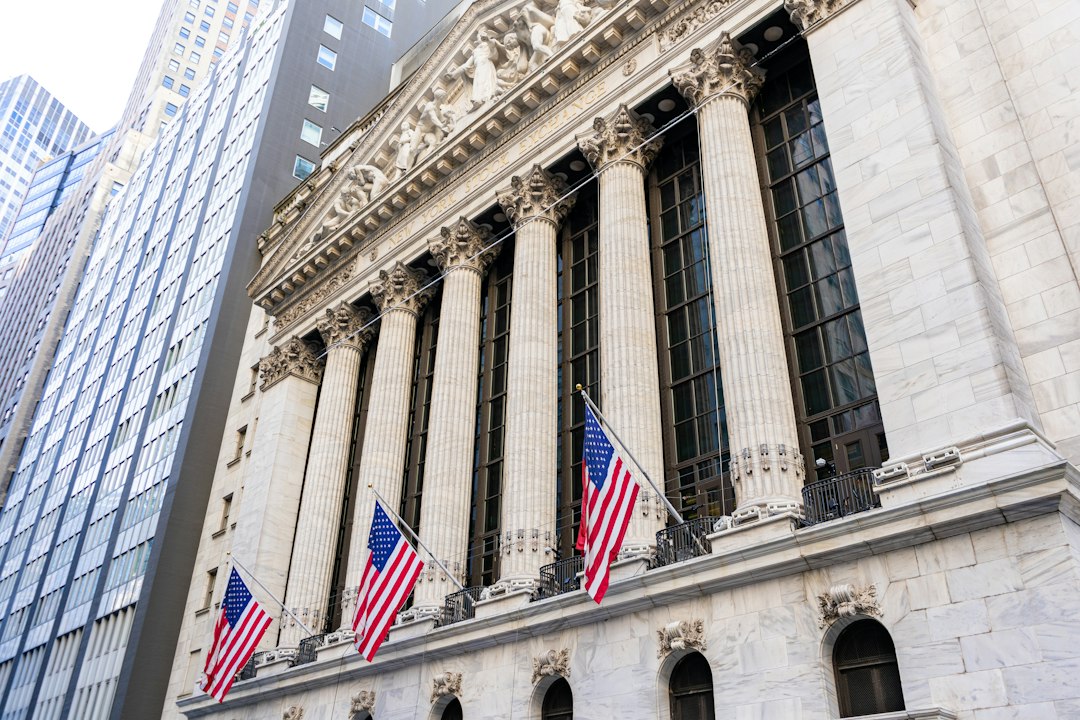
Major US equities trade on venues including the New York Stock Exchange and Nasdaq. Prices there may move before the Fed acts because markets continuously update the probability of each possible outcome.
Our earlier explainer on Fed rate-hike odds after Jackson Hole shows how quickly those probabilities can shift when policymakers or economic data challenge the prevailing view.
What to watch next
The headline inflation readings
The first reaction will likely centre on whether producer and consumer inflation land above or below market expectations. The size and breadth of any surprise will matter more than a simple hot-or-cold label.
The underlying details
Watch whether price pressure is concentrated in a few volatile categories or spread across the economy. A broad acceleration may carry a different policy message from a temporary jump in one area.
Bond-market confirmation
Treasury yields can show whether investors view the data as meaningfully changing the rate path. A brief move that quickly reverses suggests less conviction than a sustained repricing across maturities.
The Fed’s language
The policy decision is only one part of the event. Investors will also parse the central bank’s explanation for clues about inflation confidence, economic risks and the conditions needed for its next move.
Stock-market breadth
A major index can conceal sharply different reactions underneath. Comparing rate-sensitive growth shares, banks and defensive companies can reveal whether the market sees the news mainly as an inflation shock, a growth signal or both. Our guide to what an S&P 500 rally can hide explains why breadth deserves attention.
A sensible way to read the decision
The most useful question is not simply whether the Fed raises, holds or cuts. It is what the decision—and the reasoning behind it—says about the likely path of inflation, growth and future interest rates.
A tiny difference in one report may drive the immediate headlines. For long-term investors, the more durable issue is whether several data releases point in the same direction and whether company fundamentals can withstand the resulting financing environment.



Comments
Have a thought or a question? Leave a comment — no account needed.